Blog
How to Check Intermittent Boiler Faults and Strange Noises
How to check intermittent boiler faults and strange noises
A boiler that works normally between faults can be difficult to diagnose. The most useful thing you can do before arranging a repair is capture what happens around the fault, rather than trying to make the boiler fail again. A clear pattern can help distinguish a control issue from a problem that needs investigation inside the appliance.
Start by noting what the boiler was doing when the problem appeared. Was it supplying hot water, heating the radiators, or both? Did the noise begin as the boiler started, continue while it was running, or happen as it stopped? Record what you can see on the display, including any fault code, before resetting anything.
This kind of information is useful for Boiler Repair, but it is not a substitute for testing by a qualified engineer. It helps you describe the fault without taking the boiler apart.
Record the pattern, not just the symptom
Write down the sequence in plain language. For example, note whether the heating stopped before the display changed, or whether a noise came just before the boiler shut down. If the fault comes and goes, record when it happened and whether it returned after using hot water or turning the heating on. You do not need to diagnose the cause. The aim is to preserve details that might otherwise be forgotten.
Also note whether the problem affects one function or the whole system. If the radiators are cold but hot water still works, say so. If neither works, record that too. The difference can help narrow down which part of the system needs checking, though it does not prove where the fault lies.
For unusual sounds, describe them as accurately as you can: a hum, rattle, click, whistle, or bubbling noise. Note where you hear them, if that is clear, and whether they change with the boiler’s operation. Avoid putting your hands near hot pipework or removing covers to locate the source.
Make a few safe checks at home
Before calling, check the controls you normally use. Confirm that the heating timer (programmer) or thermostat is set to request heat, and that the temperature setting has not been changed accidentally. If the controls use batteries, check whether they show a low battery warning. These simple checks may reveal an external control issue, but do not keep changing settings in an attempt to force the boiler to run.
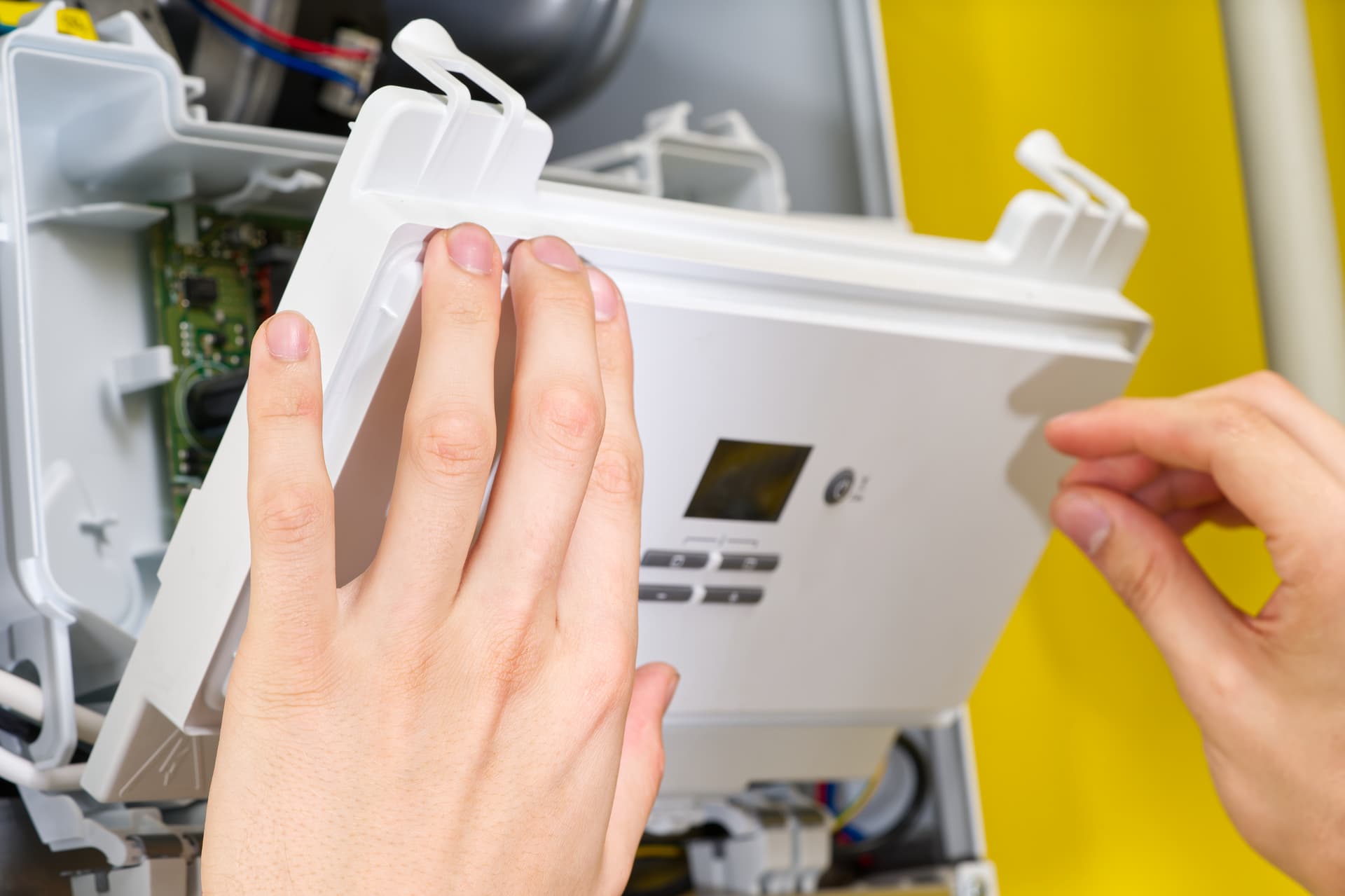
Look at the boiler display and note any code or warning exactly as it appears. Your boiler manual may explain what a displayed message means and whether it describes a user check or a fault requiring an engineer. Follow the manual’s instructions, and do not remove the boiler casing. Internal inspection and repair belong with a Gas Safe registered engineer.
If you can see a pressure gauge without removing a panel, note its reading and whether it changes when the heating runs. The correct operating range depends on the appliance and system, so use the manual rather than a general figure from the internet. Do not adjust pressure or operate an unfamiliar filling device unless the manufacturer’s instructions clearly describe that task and you are confident you can follow them.
Know when to stop checking
One reset, if the manufacturer’s instructions recommend it, may help establish whether a fault clears. If the same problem returns, record that and stop repeating the reset. Repeatedly restarting a boiler can obscure the sequence of events and will not fix a component that is failing.
Do not open the casing, handle gas components, disconnect pipework, or attempt electrical repairs. If you smell gas, do not continue investigating the boiler. Leave the property and contact the appropriate emergency gas service from a safe location.
When the fault is intermittent, a brief video or written note can be more useful than trying to reproduce it during a visit. Only record from a safe position, and do not delay seeking help to capture evidence if you are concerned about safety.
Give the engineer useful details
When you contact us, share the boiler make and model if you can read them safely, the exact display message, which functions are affected, and what you noticed immediately before the fault. Mention any checks you have already made and whether the fault returned after a reset. In Bridgend and surrounding areas, that information gives us a clearer starting point when discussing a boiler repair.
Here at Carwyn Roberts Gas Services, we are Gas Safe registered and Baxi Approved. If your boiler is making an unfamiliar noise or stopping intermittently, contact us to discuss what you have observed and the next sensible step.
Other Articles